
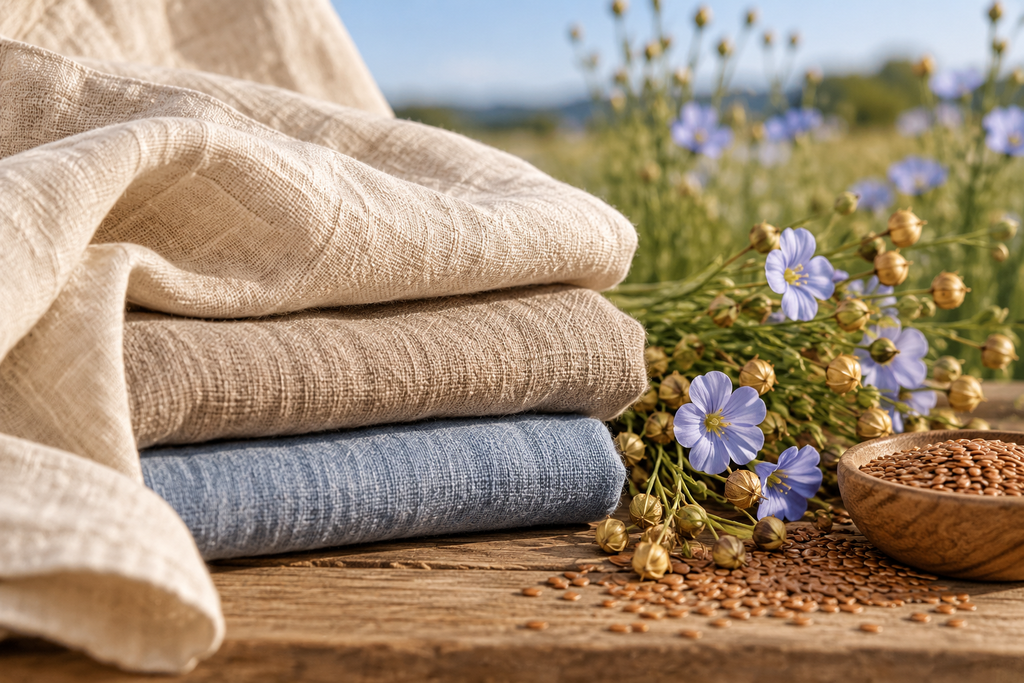
Linen is a natural plant fiber known for its breathability, strength, and distinctive texture. Made from the flax plant, linen can feel cool and comfortable in warm weather while also working beautifully in layers throughout the year. It often starts with a crisp feel and becomes softer and more relaxed with wear and washing, giving well-loved linen clothing a character of its own.
What Is Linen?
Linen is made from fibers found in the stalk of the flax plant. After the flax is harvested, the fibers are separated from the woody parts of the stalk, prepared, spun into yarn, and woven or knitted into fabric. Linen fibers are naturally strong, and the finished fabric can range from lightweight and airy to heavier and more structured, depending on how it is made.
Why Choose Linen?
Linen is valued for its breathability, durability, and ability to feel cool and comfortable against the skin. It absorbs moisture and dries relatively quickly, which can make it especially appealing in warm weather. Linen also tends to become softer and more relaxed with repeated wear and washing while retaining the natural texture that gives the fabric its distinctive character.
How Linen Performs
Linen is breathable and absorbent, allowing it to take in moisture while letting heat move away from the body. It can feel cool and comfortable in warm conditions and may dry faster than cotton. Linen is also a strong fiber, although the way a garment performs will depend on its fabric weight, construction, and any other fibers blended with it.
Linen for Everyday Wear
Linen works especially well for shirts, dresses, skirts, pants, sleepwear, and other everyday clothing. Lightweight linen can feel airy and comfortable in warm weather, while heavier linen fabrics can provide more structure for pants, jackets, and other layers. Its naturally relaxed appearance is part of its character, and many linen garments become softer and more comfortable the more they are worn.
Linen for Outdoor Layers
Linen can be a comfortable choice for outdoor clothing in warm, dry, or moderately humid conditions because it is breathable and allows heat to escape. Lightweight linen shirts and pants can provide coverage without feeling overly heavy, while sturdier linen fabrics can work for more substantial layers. For cold or very wet conditions, linen is usually best considered as part of a broader layering system rather than as weather protection on its own.
Linen & Durability
Linen is made from strong flax fibers and can be remarkably durable when made into a well-constructed fabric. With regular use, linen often becomes softer and more flexible rather than simply feeling worn out. The lifespan of a linen garment will also depend on the fabric weight, construction, care, and how the garment is used.
Linen Blends
Linen is often blended with other fibers to combine their different qualities. Linen and cotton can create a softer fabric while retaining some of linen’s texture and breathability, while linen and wool can combine linen’s strength with wool’s warmth and temperature-regulating qualities. Linen may also be blended with other natural or synthetic fibers to change its softness, stretch, drape, or durability. Checking the fiber-content label will show you exactly what the garment contains.
Caring for Linen
Linen is generally durable and often becomes softer with repeated wear and washing. Care instructions can vary depending on the garment and whether the linen is blended with other fibers, so always check the label. Washing only when needed, using cooler water when appropriate, and avoiding excessive heat can help reduce shrinkage and extend the life of the garment.
Is Linen Right for You?
Linen can be a wonderful choice if you value breathability, durability, natural texture, and clothing that becomes softer and more comfortable with use. It is especially well suited to warm-weather clothing but can also work in year-round layers depending on the fabric weight and construction. The best linen for you will depend on the garment, the conditions you plan to wear it in, and the feel and texture you prefer.