
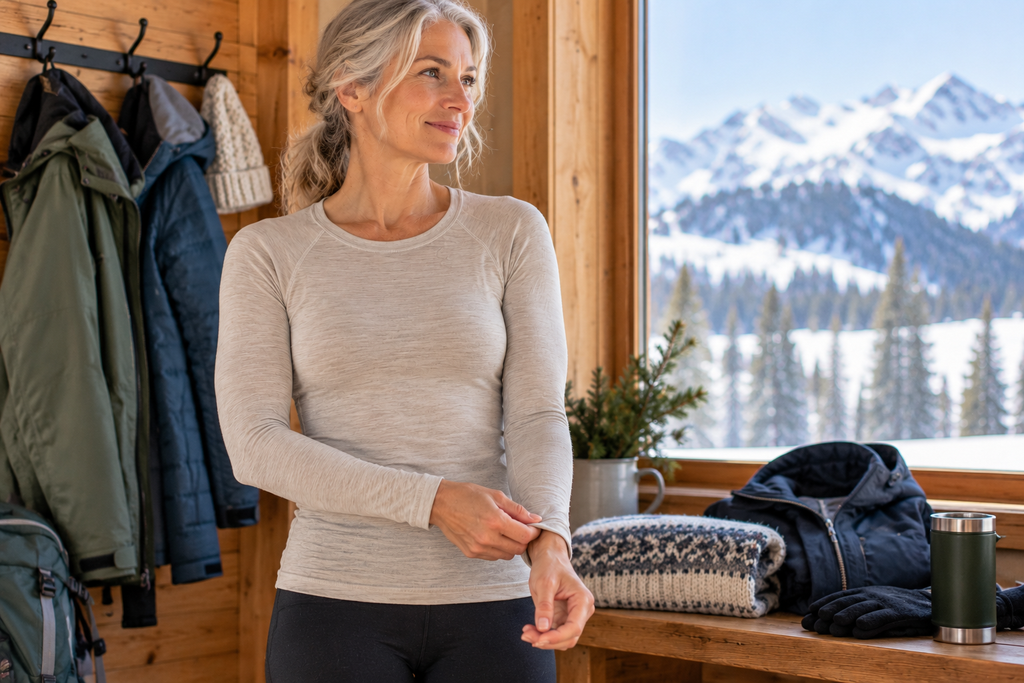
Base layers are the foundation of a comfortable layering system. Worn closest to your skin, they help manage moisture and regulate comfort as your body temperature and activity level change. Natural fibers such as merino wool and silk can provide warmth, breathability, and comfort without requiring a heavy layer.
What Does a Base Layer Do?
A base layer helps move moisture away from your skin while providing a comfortable first layer of insulation. This can be especially important during outdoor activities, when you may warm up while moving and cool down when you stop. A good base layer should feel comfortable against your skin and work with the other layers you add over it.
Choosing a Natural-Fiber Base Layer
Merino wool and silk are two natural fibers especially well suited to base layers. Merino wool can help manage moisture and temperature while remaining comfortable across a range of conditions. Silk is lightweight, smooth against the skin, and can add surprising warmth in a very thin layer. The best choice depends on the weather, your activity, and what feels most comfortable against your skin.
Merino Wool Base Layers
Merino wool is one of the most versatile natural fibers for base layers. Fine merino can feel soft against the skin while helping manage moisture and regulate temperature. It also resists odor naturally, which can make merino especially useful for hiking, travel, skiing, and other activities where you may wear the same layer for extended periods.
Silk Base Layers
Silk can be an excellent base-layer choice when you want warmth with very little weight. Silk long underwear fits easily beneath other clothing and can add valuable insulation as part of a layering system, even in very cold conditions. Its smooth texture can also make it especially comfortable next to the skin.
Base Layers for Different Activities
The right base layer can vary with what you are doing. For lower-intensity activities or very cold conditions, a warmer base layer may feel best. For hiking, skiing, or other activities where you generate more body heat, a lighter layer can help you stay comfortable as you move. Having a few different weights and fibers gives you flexibility as the weather and your activity change.
Fit Matters
Base layers generally work best when they fit close enough to the body to manage moisture and layer comfortably under other clothing, but they should not feel restrictive. A comfortable fit also helps prevent bunching when you add sweaters, jackets, or other layers on top.
Caring for Base Layers
Base layers often benefit from gentle washing and careful drying, especially when they are made from merino wool or silk. Always check the garment’s care label, since washing instructions can vary by fiber and construction. Proper care can help natural-fiber base layers keep their shape, softness, and performance over time.
Is a Natural-Fiber Base Layer Right for You?
Natural-fiber base layers can be a comfortable choice for everyday cold weather, travel, and outdoor activities. Merino wool offers versatility across changing temperatures and activity levels, while silk provides lightweight warmth that layers easily beneath other clothing. The right choice is the one that feels good against your skin and works well with the rest of your layering system.