
Bamboo clothing is often promoted as a natural-fiber choice because bamboo itself is a plant. But the story is more complicated. Most of the soft, silky bamboo clothing sold today is made from rayon or viscose produced from bamboo cellulose, which requires substantial processing to turn the plant into textile fiber. Less commonly, bamboo can be mechanically processed into a fiber more like linen. Understanding that difference can help you know what you are actually buying.
What Is Bamboo Fabric?
The term “bamboo fabric” can describe textiles made from bamboo in very different ways. Most bamboo clothing is made by extracting cellulose from the bamboo plant and chemically processing it into a regenerated fiber such as rayon or viscose. In this form, bamboo is the source material, but the finished textile is considered a manufactured fiber rather than a natural fiber like cotton, linen, hemp, wool, or silk. A much less common type is made by mechanically processing bamboo stalks into fibers that can be spun into yarn, sometimes called bamboo linen.
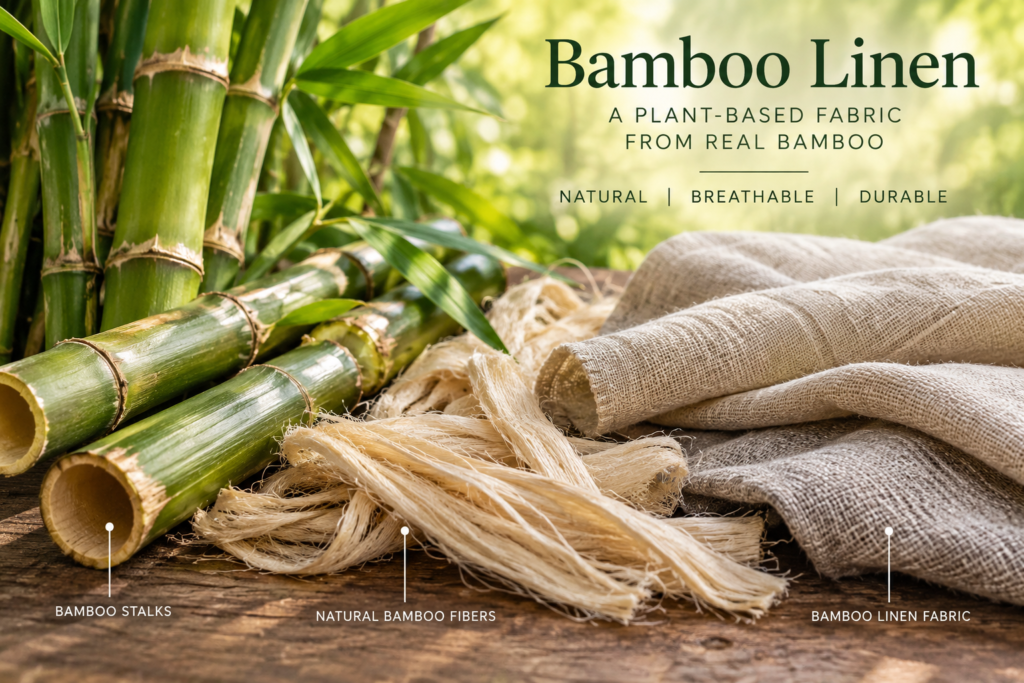
Mechanically Processed Bamboo: The Less-Processed Option
Mechanically processed bamboo fiber is made by physically separating and preparing fibers from bamboo stalks rather than dissolving the plant into cellulose and regenerating it into rayon or viscose. The fibers can then be prepared, spun into yarn, and made into fabric. This type of bamboo textile is much less common than bamboo rayon or viscose and generally has a more linen-like texture rather than the unusually silky feel associated with most clothing labeled “bamboo.”
Why Choose Bamboo Linen?
Bamboo linen may appeal to people who want a plant-based fabric that retains more of the character of the original bamboo fiber. It can offer breathability, strength, and a natural texture somewhat similar to linen or hemp. Because true mechanically processed bamboo linen is relatively uncommon, it is important to read fiber labels and product descriptions carefully rather than assuming that every garment marketed as “bamboo” is made this way.
How Bamboo Linen Performs
Bamboo linen can be breathable and durable, with a firmer, more textured feel than the silky bamboo viscose commonly found in clothing. Like linen and hemp, its performance depends on how the fibers are processed, spun, and made into fabric. Because true bamboo linen is relatively uncommon, the feel and performance can vary considerably from one textile to another.
Bamboo Linen for Everyday Wear
Bamboo linen can be used for shirts, dresses, pants, skirts, and other everyday clothing where breathability and a natural plant-fiber texture are desirable. Rather than expecting the silky softness associated with bamboo viscose, it is better to think of true bamboo linen as more comparable to linen or hemp. The feel will depend greatly on how the fiber and fabric have been processed and finished.
Bamboo Linen for Outdoor Layers
Bamboo linen may work well for lightweight outdoor clothing in warm or moderate conditions, particularly when breathability and coverage are important. Shirts, pants, and other layers made from mechanically processed bamboo can offer a natural-fiber option with qualities somewhat similar to linen or hemp. Because true bamboo linen is uncommon, the fabric’s construction, weight, and actual fiber content are especially important when deciding whether a garment is suitable for outdoor use.
Bamboo Linen & Durability
Mechanically processed bamboo fibers can produce durable fabrics, but the strength and longevity of bamboo linen depend greatly on how the fiber is extracted, spun, woven, and finished. Because true bamboo linen is still relatively uncommon, quality can vary considerably between products. A well-made garment should be judged by its actual fiber content and construction rather than by the word “bamboo” alone.
How to Tell What Kind of Bamboo You’re Buying
Look beyond the word “bamboo” on the front of a garment or product description and check the actual fiber-content label. Most soft bamboo clothing is made from rayon or viscose derived from bamboo, not mechanically processed bamboo fiber. True bamboo linen is much less common and should be identified accordingly. If the description is unclear, look for details about how the fiber was produced or ask the manufacturer before assuming the fabric is mechanically processed bamboo.
Caring for Bamboo Linen
Care requirements can vary depending on how the bamboo linen fabric was made and whether it is blended with other fibers, so always check the garment’s care label. Gentle washing, cooler water when appropriate, and avoiding excessive heat can help protect the fabric and reduce unnecessary wear. Proper care can help a well-made bamboo linen garment maintain its shape, texture, and usefulness over time.
Is Bamboo Linen Right for You?
Bamboo linen may be worth considering if you want a plant-based fabric that is mechanically processed rather than regenerated into rayon or viscose. It can offer breathability, durability, and a natural texture similar to linen or hemp, but true bamboo linen can be difficult to find. The most important step is to check the fiber-content label and understand how the fabric was made so you know whether you are buying mechanically processed bamboo or rayon or viscose derived from bamboo.