
Alpaca is a natural animal fiber known for its softness, warmth, and light weight. Often compared with wool, alpaca can provide excellent insulation without requiring a heavy or bulky fabric. It is used in sweaters, socks, scarves, hats, base layers, and other clothing designed to provide comfortable warmth in cool and cold conditions.
What Is Alpaca Fiber?
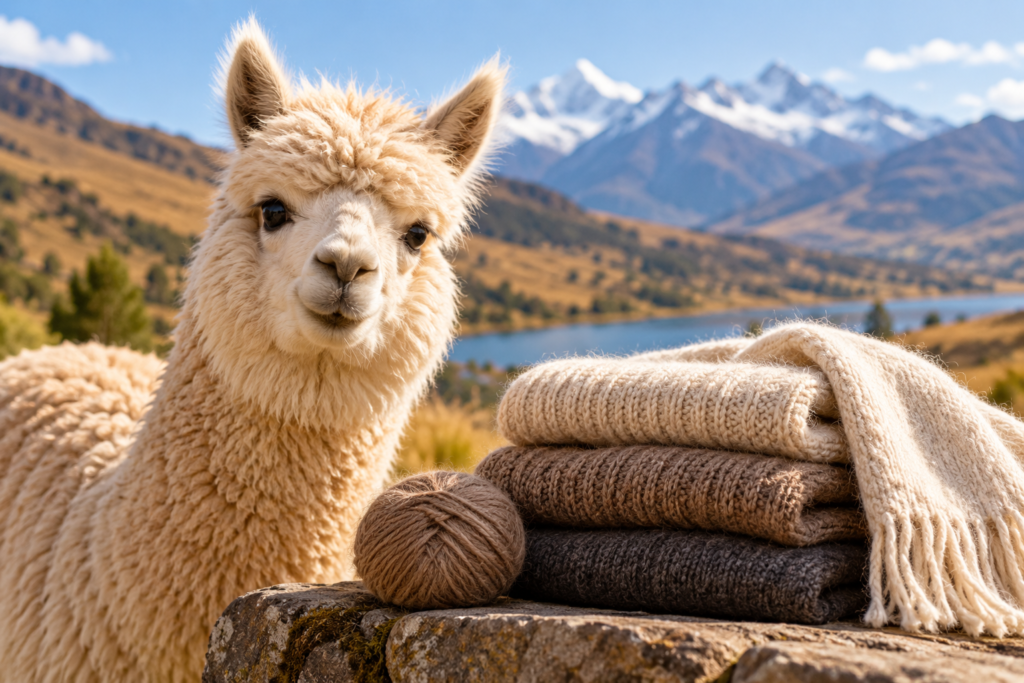
Alpaca fiber comes from alpacas, animals native to the Andes of South America and relatives of llamas. Their fleece is shorn and the fibers are cleaned, sorted, spun into yarn, and made into fabric or knitted garments. Alpaca fibers are available in different grades and levels of fineness, which can influence how soft the finished clothing feels against the skin.
Why Choose Alpaca?
Alpaca fiber is valued for providing warmth without excessive weight or bulk. Fine alpaca can feel soft and smooth against the skin, while its insulating qualities make it useful in cold-weather clothing. Depending on the garment and fiber grade, alpaca can work well in everything from sweaters and socks to scarves, hats, and warm layers for outdoor use.
How Alpaca Performs
Alpaca fiber provides excellent insulation while remaining relatively lightweight. Its fibers can trap air, helping retain warmth in cold conditions without requiring a particularly thick layer. Alpaca can also manage moisture, although performance varies with the fineness of the fiber, the construction of the fabric, and whether it is blended with other materials.
Alpaca for Everyday Wear
Alpaca works beautifully in sweaters, cardigans, socks, scarves, hats, and other everyday cold-weather clothing. Fine alpaca can feel soft and comfortable against the skin, while heavier knits can provide substantial warmth. Because alpaca offers warmth without a great deal of bulk, it can also be useful when you want comfortable layers that are easy to wear indoors and out.
Alpaca for Outdoor Layers
Alpaca can be a useful insulating layer for outdoor activities in cool and cold conditions. Sweaters, socks, hats, gloves, and other alpaca layers can provide warmth without excessive bulk and can fit comfortably beneath protective outer layers. As with other insulating natural fibers, the best performance will depend on the garment, weather conditions, activity level, and the rest of your layering system.
Alpaca & Durability
Alpaca fiber can be durable when it is made into a well-constructed garment, but durability varies with fiber fineness, yarn, fabric construction, and use. Like other fine animal fibers, alpaca can develop pilling or show wear from repeated friction. Gentle care and proper storage can help alpaca clothing maintain its softness, shape, and appearance over time.
Alpaca Blends
Alpaca is often blended with other fibers to combine their different qualities. Alpaca and wool can create warm, resilient fabrics, while blends with silk can add smoothness and drape. Alpaca may also be blended with cotton or synthetic fibers to change a garment’s weight, strength, stretch, or ease of care. Checking the fiber-content label will show you how much alpaca the garment actually contains.
Caring for Alpaca
Alpaca clothing generally benefits from gentle care. Always check the garment’s care label, since instructions can vary depending on the fabric and any fibers blended with it. When appropriate, cool water, gentle washing, and laying the garment flat to dry can help protect the fibers and maintain its shape. Avoiding excessive heat and unnecessary washing can also help extend the life of alpaca clothing.
Is Alpaca Right for You?
Alpaca can be an excellent choice if you value warmth, softness, and insulation without excessive weight or bulk. It can work especially well for sweaters, socks, accessories, and insulating layers in cool and cold conditions. The best alpaca clothing for you will depend on the fineness of the fiber, the construction of the garment, the conditions you plan to wear it in, and how the fiber feels against your skin.